AWS ≠ GDPR safe: the privacy trap founders miss
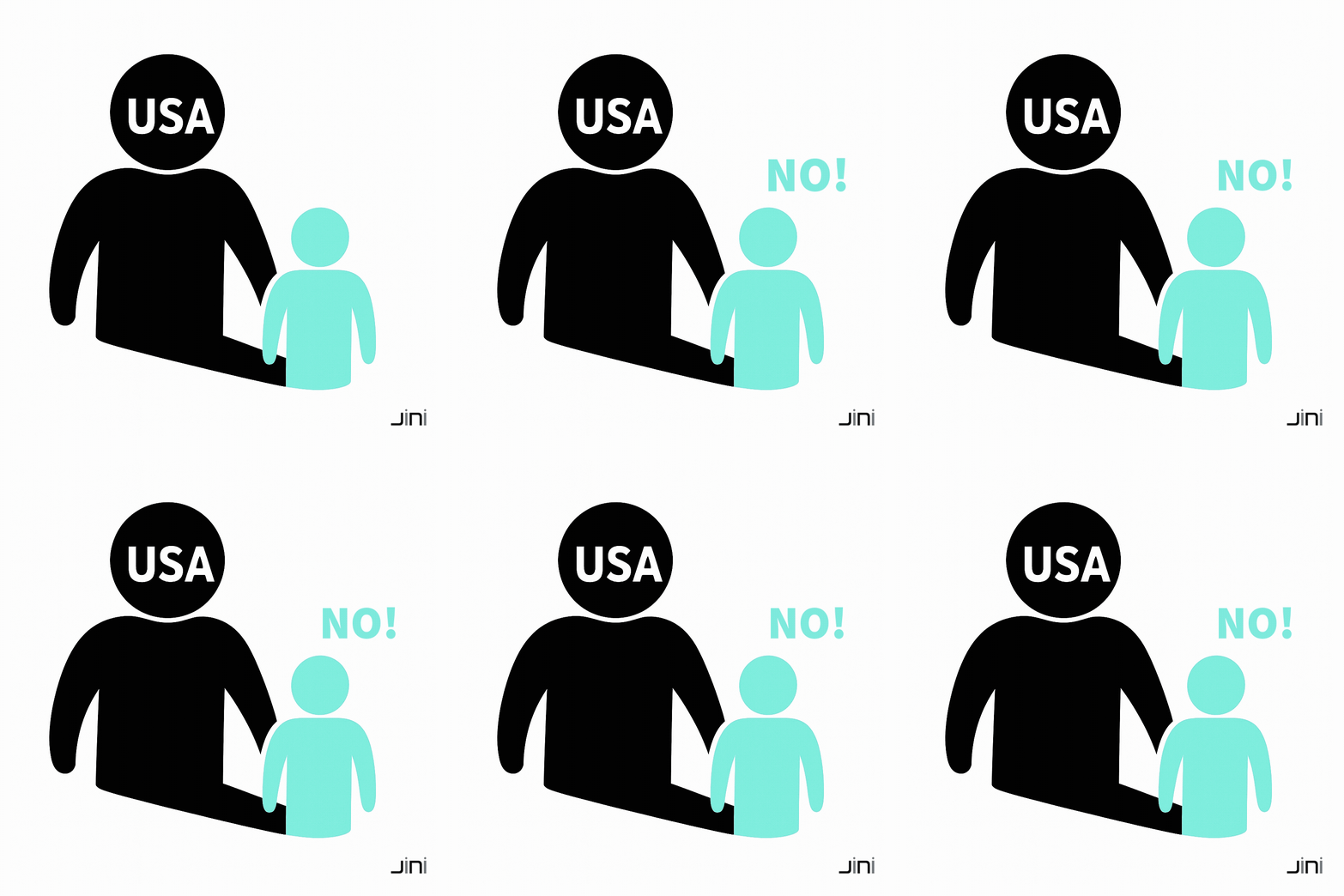
AWS ≠ GDPR safe. If that sentence makes you uncomfortable, good, because it’s one of the most common blind spots I see in early-stage teams.
The last two projects I worked on were in healthcare, and they reminded me how easy it is for founders to overlook a very simple question:
Where does my users’ data actually live, and who can legally demand access to it?
This isn’t a “big company” problem. It becomes a startup problem the moment you handle personal data, health data, finance data, or anything your users expect to stay private.
Two facts every founder should know
1) GDPR (Europe): you’re responsible
Under GDPR, you (the company) are responsible for keeping users’ data safe and private.
That means:
- You must know where data is stored and processed.
- You must control who can access it (including vendors).
- You must be able to justify your choices if regulators (or customers) ask.
2) CLOUD Act (US): authorities can request access
The US CLOUD Act allows American authorities to demand access to:
- Data stored in the US
- And in some cases, data stored in Europe if it’s hosted by a US company (think AWS, Azure, Google Cloud)
See the issue?
These two frameworks can collide.
You might think you’re doing “the right thing” by selecting an EU region, but jurisdiction isn’t only about geography, it’s also about the provider and the legal reach around it.
For sensitive products, that’s not a theoretical risk. It’s a trust risk.
What you can do (practical steps)
There’s no single silver bullet, but here are moves that materially reduce your exposure and increase user trust:
Encrypt and anonymize (properly)
- Encrypt: so raw data is useless without the keys.
- Anonymize / pseudonymize: so even if something leaks, it can’t be tied back to a person easily.
- Key management matters: encryption is only as strong as who controls the keys.
Pick the right cloud provider (for your risk level)
If privacy is central to your product, don’t rely only on AWS/Azure by default.
Consider European options like:
- OVH
- Scaleway
- Other EU-based providers with strong data residency and compliance positioning
Make data protection part of your product, not just compliance
If you treat privacy as “paperwork,” you’ll always be behind. If you treat it as part of your value proposition, you build a product that users (and investors) can trust.
If you’re building a startup, remember: data protection isn’t just compliance, it’s part of your value proposition. Users (and investors) will thank you for thinking about it early.
At JiNi, we’d be happy to support you, from auditing your current setup to implementing the right solutions, so you can focus on growing your business with peace of mind.