The Hidden Drawbacks of Hiring Senior Engineers
Yes, you read that right. Hiring senior engineers is usually a great move. Seniors bring deep expertise, sharper intuition, and the kind of pattern recognition you only get after seeing the same mistakes in multiple companies. They can spot risks early, make good technical calls under pressure, and unblock teams fast.
But there’s a hidden trap that can quietly slow a startup down:
Overengineering.
Not because seniors are “bad,” but because experience often comes with an instinct to prevent every future problem before it happens. And in many environments, big companies, regulated industries, massive scale, that instinct is exactly what you want.
In an early-stage product, it can become a tax.
What overengineering looks like in practice
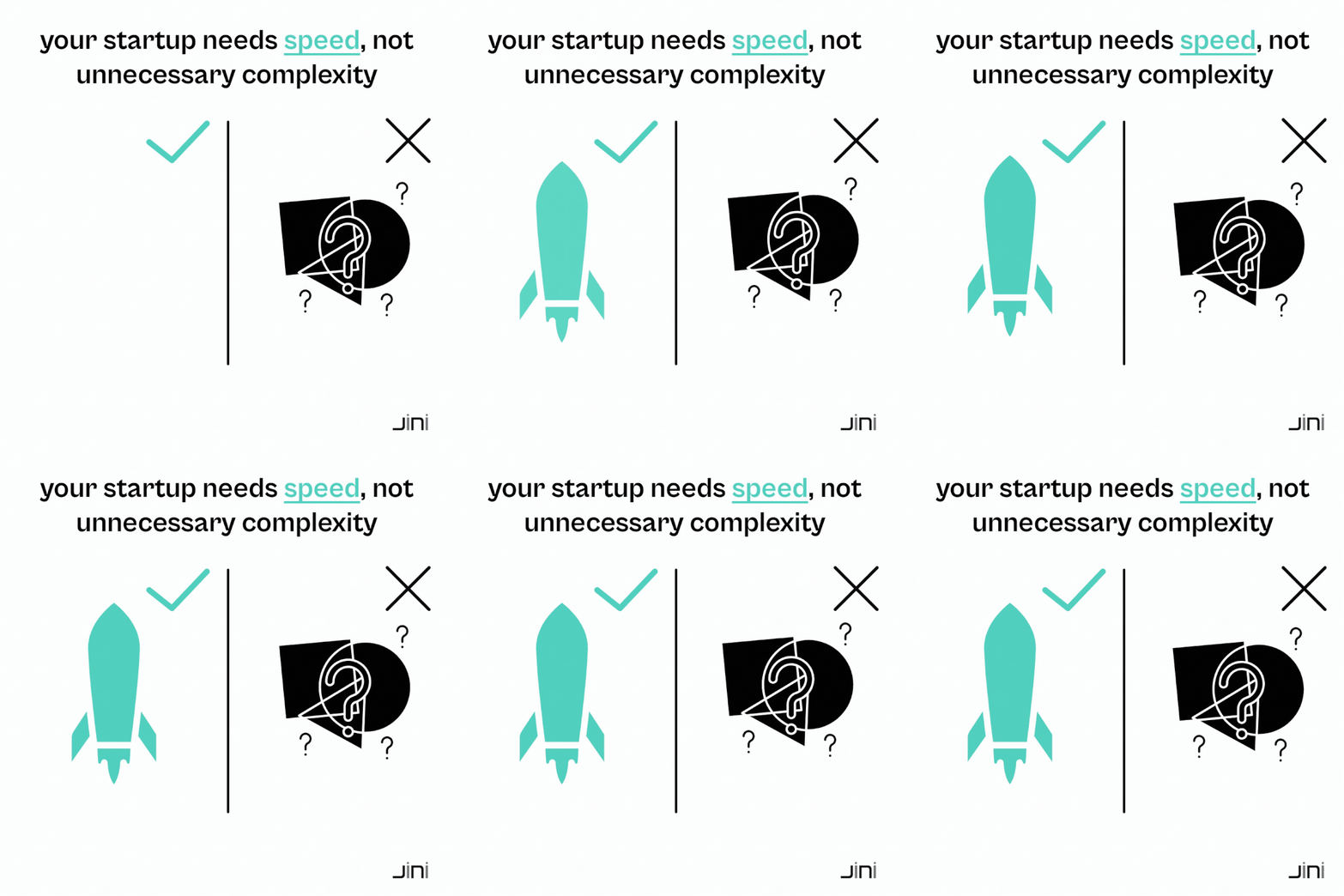
Overengineering isn’t “writing good code.” It’s building for a reality that doesn’t exist yet.
It often shows up as:
- Designing systems for problems your product might have in 2 years.
- Adding layers of abstraction “just in case.”
- Creating architecture diagrams that are more complex than the product itself.
- Introducing tools, frameworks, and patterns that require onboarding, rituals, and maintenance.
- Slowing delivery while chasing the “perfect” solution.
The cost isn’t just time. It’s momentum.
Why this hurts startups specifically
In a startup, speed and adaptability matter more than perfection.
Your product will change direction. Your users will surprise you. Your roadmap will get rewritten, sometimes monthly, sometimes weekly. That feature you’re future-proofing might get deleted before it ships. The “scale problem” you’re designing for might never arrive. Or it might arrive in a completely different form than you predicted.
When you build too far ahead, you pay for complexity now to avoid a hypothetical problem later.
And complexity compounds:
- Every extra layer means more code to understand.
- More moving parts means more points of failure.
- More structure means slower iteration.
The sweet spot: readability + stability
The goal isn’t to avoid seniors. The goal is to align them with the stage you’re in.
The best engineers at startups don’t just build “strong” systems, they build systems that are:
- Readable: clear, simple, easy for the team to understand and modify.
- Stable: resilient enough for today’s needs, with sensible boundaries and good defaults.
- Evolvable: designed so you can extend or refactor when the real requirements show up.
In other words: build something solid and simple, and leave yourself room to change your mind.
So yes, hire senior engineers (with the right mindset)
Senior engineers are a huge advantage when they’re aligned with the reality of your stage:
- Deliver fast.
- Keep it simple.
- Solve today’s problems, not tomorrow’s guesses.
Because the “perfect” architecture that ships late is worse than the “good enough” solution that ships now and learns from real users.